
GSM Industrial removed, repaired, and reinstalled a gas turbine inlet silencer and elbow for Envanio at a Virginia power plant.
On a gas turbine, the inlet silencer sits on the clean-air side of the filters. Rust that breaks loose there has one place to go: the compressor. At a gas-fired power plant in Virginia, the floors of the inlet silencer and the elbow downstream of it were badly corroded, and the silencer sat in the duct nearly 45 feet above grade.

GSM Industrial completed a gas turbine inlet silencer repair for Envanio at a Virginia power plant, on site from April 18 to May 1, 2026. The scope covered a 62,000-pound silencer and its downstream elbow, set 44 feet 10 inches above grade, with all 26 baffles removed and reinstalled. The crew repaired severe floor corrosion, applied Sherwin-Williams Macropoxy 646 epoxy, and installed 10-gauge 304 stainless steel cladding. GSM finished one day ahead of schedule.
| Customer | Envanio |
| Industry | Power generation (gas-fired) |
| Location | Virginia |
| Project Type | Gas turbine inlet silencer and elbow corrosion repair |
| Silencer | 62,000 lbs, 12 ft high x 28 ft wide x 12 ft deep, 26 internal baffles |
| Elevation | 44 ft 10 in above grade |
| Flange Connections | 124 bolts at each major flange |
| Floor Repair | Corrosion repair welding, 6 mils Sherwin-Williams Macropoxy 646 epoxy, 10-gauge 304 stainless steel cladding |
| Access | Crane and rigging, scaffolding, high-reach lifts, temporary supports, barrier walls |
| GSM Crew | 4: one working foreman and safety lead, three welder-mechanics |
| On Site | April 18 to May 1, 2026, one mobilization, finished one day ahead of schedule |
| GSM Services | Rigging, mechanical disassembly and reassembly, field welding, coating, insulation, plant maintenance |
Severe corrosion ran across the floors of both the silencer and the downstream elbow. The steel had to be mechanically prepared before any coating or cladding could go down, and the weld repairs had to go into badly deteriorated base metal, which is slower and harder than welding sound plate. Reaching that floor meant rigging the silencer and elbow out of an elevated duct system, then pulling all 26 baffles along with their upstream and downstream stops and the bleed heat supports. Every baffle had to go back in the right position afterward.


GSM sent one four-person plant maintenance crew: a working foreman who also served as safety lead, and three welder-mechanics. Using a crane, scaffolding, and high-reach lifts, the crew handled the rigging, broke the 124-bolt flange connections, set the silencer and elbow down, and installed temporary supports and barrier walls around the open duct.

With the baffles out, the same crew handled the corrosion repair and field welding. The new floor combines 10-gauge 304 stainless steel cladding with 6 mils of Sherwin-Williams Macropoxy 646 epoxy. The crew also modified the bleed heat piping supports. Then they reset all 26 baffles in their original positions, reinstalled the silencer and elbow, replaced disturbed hardware, reinstalled insulation, sealed the flanges, and cleaned up. No separate rigging, welding, or coating crew came on site.

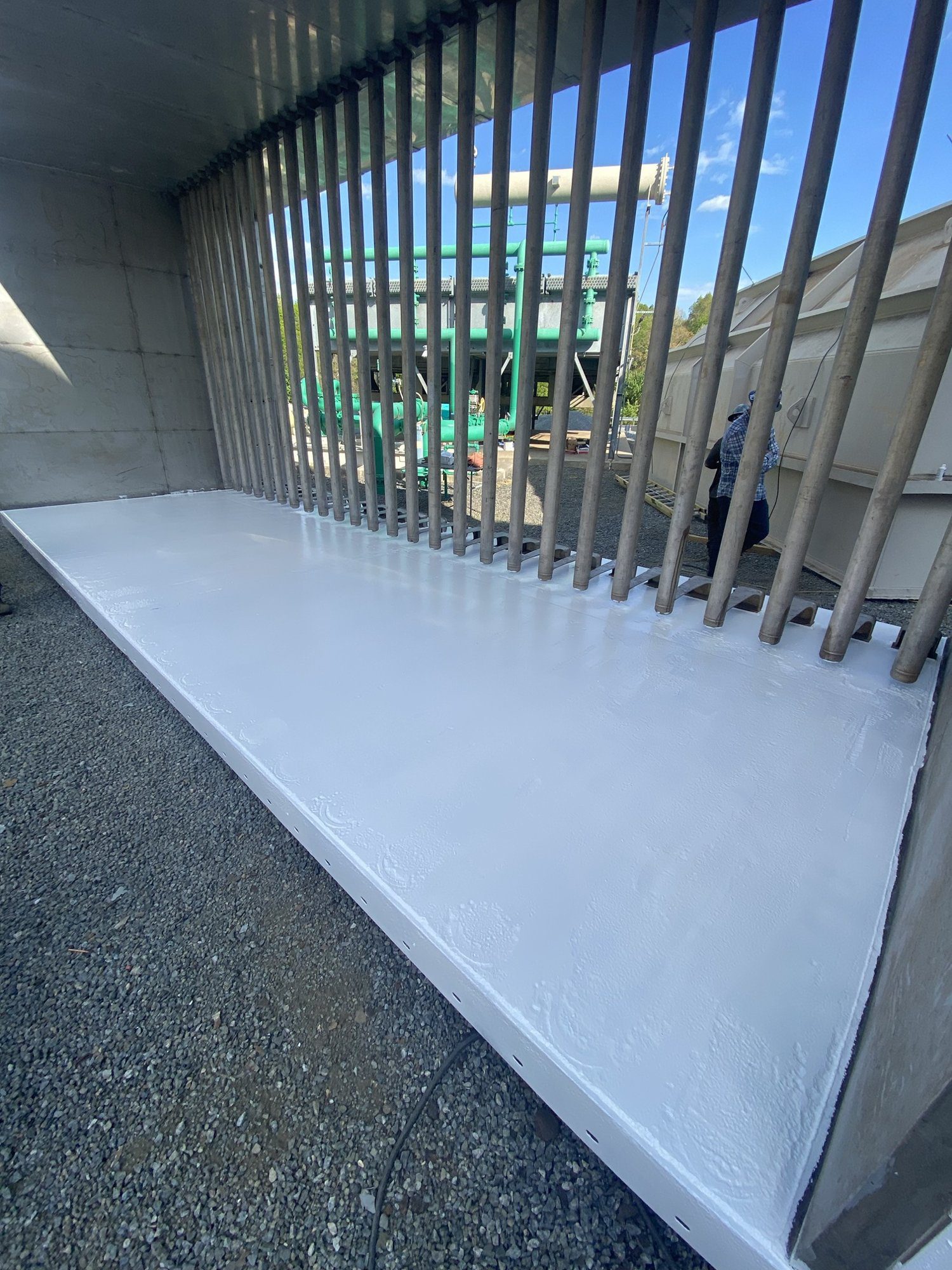
GSM finished on May 1, one day ahead of schedule, in a single mobilization with no scheduling issues or delays, despite the extra welding the corrosion demanded. The silencer and elbow went back in place with repaired, clad, and coated floors. Four people took a 31-ton assembly apart, fixed it, and put it back a day early.

We didn’t have to bring in a separate rigging crew, a welding crew, a coating crew, or additional specialists every time the job changed gears. The GSM crew handled the work from disassembly through final cleanup.
Corrosion inside a gas turbine inlet silencer matters because the silencer sits downstream of the inlet filters, so rust and coating chips that break loose can be carried straight to the compressor. Industry guidance flags debris released on the clean-air side of the filters as a cause of compressor airfoil damage. Repairing corroded floor steel and protecting it with coatings or stainless steel cladding keeps that material in place.
In many cases, yes: corroded silencer floor sections can be repaired, coated, and clad with stainless steel without replacing the whole silencer. On this project, GSM rigged down a 62,000-pound silencer from 44 feet 10 inches above grade, removed its 26 baffles, weld-repaired the deteriorated floor steel, protected it with 304 stainless steel cladding and epoxy, and reinstalled the assembly.
Yes, GSM Industrial performs plant maintenance, rigging, and field welding during planned outages, with crews that cover more than one trade. On this job, a four-person crew handled rigging, disassembly, welding, coating, cladding, reassembly, and cleanup in a single mobilization.
GSM Industrial rigs, repairs, and reinstalls silencers, ductwork, and other heavy equipment during planned outages, with crews that handle rigging, welding, and coating.
Useful details for scoping a repair: equipment size and weight, elevation, current condition and photos, outage window, coating or cladding specs, and site access.
Call 717-207-8985 or contact us to start a conversation.

